Monday, February 3, 2014

Human Variation & Race


Heat is one of the most common environmental stresses that negatively impact the survival of humans by disturbing homeostasis. Humans typically react quickly to heat in order to be more comfortable and not be irritated. Heat can cause a human to become uncomfortable and overheat the body. Humans can also become dehydrated because of heat and even become sick if not treated. Depending on the extent, heat can cause major problems for humans.

 Short-term adaptations for humans include losing water from the body and sweating too much that can cause a heat rash. When the body gets in contact with an excessive amount of heat, the body then reacts to it by cooling itself, once the body sweats for too long or the sweat ducts are blocked then a heat rash occurs. The body of a human must be maintained at a certain temperature and therefor the body will use the water it has to decrease the heat.  Heat rashes are most common when it is hot. Facultative adaptations include vasodilation, which is the widening of the blood vessels. When an environment is too hot, vasodilation allows for the blood vessels to to move where heat can be released so that the body can cool off. This facultative adaptation allows for a person to maintain itself at a cooler temperature. Bipedalism is a form of a developmental adaptation. Being able to move on two legs allows for the body to be at a higher surface, which helps dissipate heat. A cultural adaptation would be the modern use of an air conditioner, which many people in modern countries use to cool off. Air conditioners allows for a person to alter the temperature in a room and make it so that it is not too hot. This cultural adaptation has been very useful for areas that reach high temperatures. 


            A benefit to studying human variations from this perspective allows for us to be better prepared. Information from explorations will allow us to survive through tough summers where temperatures rise. By studying these variations we know how to protect our bodies in the heat, by turning on the air conditioner, to wearing lighter colors, and staying hydrated.  I don’t think race could be used to understand the variation because everyone can be affected by heat, and reacts to heat the same way.  Environmental influences affect everyone and it is important to understand how to prevent environmental stresses.

Tuesday, January 28, 2014

Piltdown Hoax


The Piltdown Hoax was a learning lesson in the scientific field. In the early 1900’s in Sussex, England, a laborer discovered a piece of skull who then passed it on to an archaeologist, Charles Dawson. This piece of skull was rather important because it was thought to be of an early man, which would have been a first in England whose rival Germany was considered the birthplace of early man. Darwin believed the piece of skull was a puzzle piece of information for early man and evolution. As they found more remains of early animals and other prehistoric items they came across an ape like jawbone with teeth similar to a human and believed it to me the missing link. The newest find of the jawbone was a breakthrough for he scientific world because it showed similarities of a human and ape. Sir Arthur Smith Woodward a geologist and archeologist Teilhard de Chardin collaborated with Dawson on his discovery and when presented to the public the trio and the location of Piltdown became famous around the world for what was considered he earliest human ancestor. Piltdown Man was then called a hoax after 40 years since its finding, test were conducted to find out the nitrogen context it was concluded that the jaw was from a different age, the teeth filed down, skull stained, and possibly from an orangutan, not a humans. It was all then a mystery as to if Darwin and Chardin, and Woodward were in on the hoax, if they knew it wasn’t authentic, and if they created the idea that it was of early man.
            Human faults were the principle reason to why it negatively impacted the scientific process. Since the case was not fully solved as to who specifically was behind the hoax it could have been done for pride and rivalry reasons, especially since the finding was around the time that World War 1 was beginning and England was against Germany. Also, if both pieces of skull were further studied by outside sources rather than it be isolated by other scientist, the hoax could have been solved a lot earlier. It was during a time that people wanted certain answers and a specific answer and wanted to believe what was most convenient.
            When others tested the pieces of the skull, it was not until then, that it was revealed that the skull was not as old as previously believed. In the Natural History Museum, mineral department, test were conducted to estimate the nitrogen content of the skull. It was also then realized that the jaw was not of human, fossils were boiled and stained with chemicals to appear aged. It was until after the World War that newer technology was introduced to measure fluorine content in fossils that scientist could then roughly estimate the date of it.
            I think it is possible to remove “human” factors from science to certiain extent because I believe that human factors have the potential to further solve cases but also do the opposite, like in the beginning of this hoax. I believe that with the addition of science, technology, and further research, the human factor can add success to solution. I personally would not want to remove the human factor in science because the human factor has a great impact in science. It is because of human factors that science is more modern and newer discoveries have been made.       The most important lesson that I learned in this historical event is to not truly believe in something until it has been researched and tested by numerous qualified individuals. I would be more skeptical, ask questions, and do my own investigations before taking information from unverified sources. Another important lesson is that regardless of the faith, nationality, or beliefs, always keeps an open mind to other things in life.

Tuesday, January 21, 2014

Analogy/Homology


Homologous
 
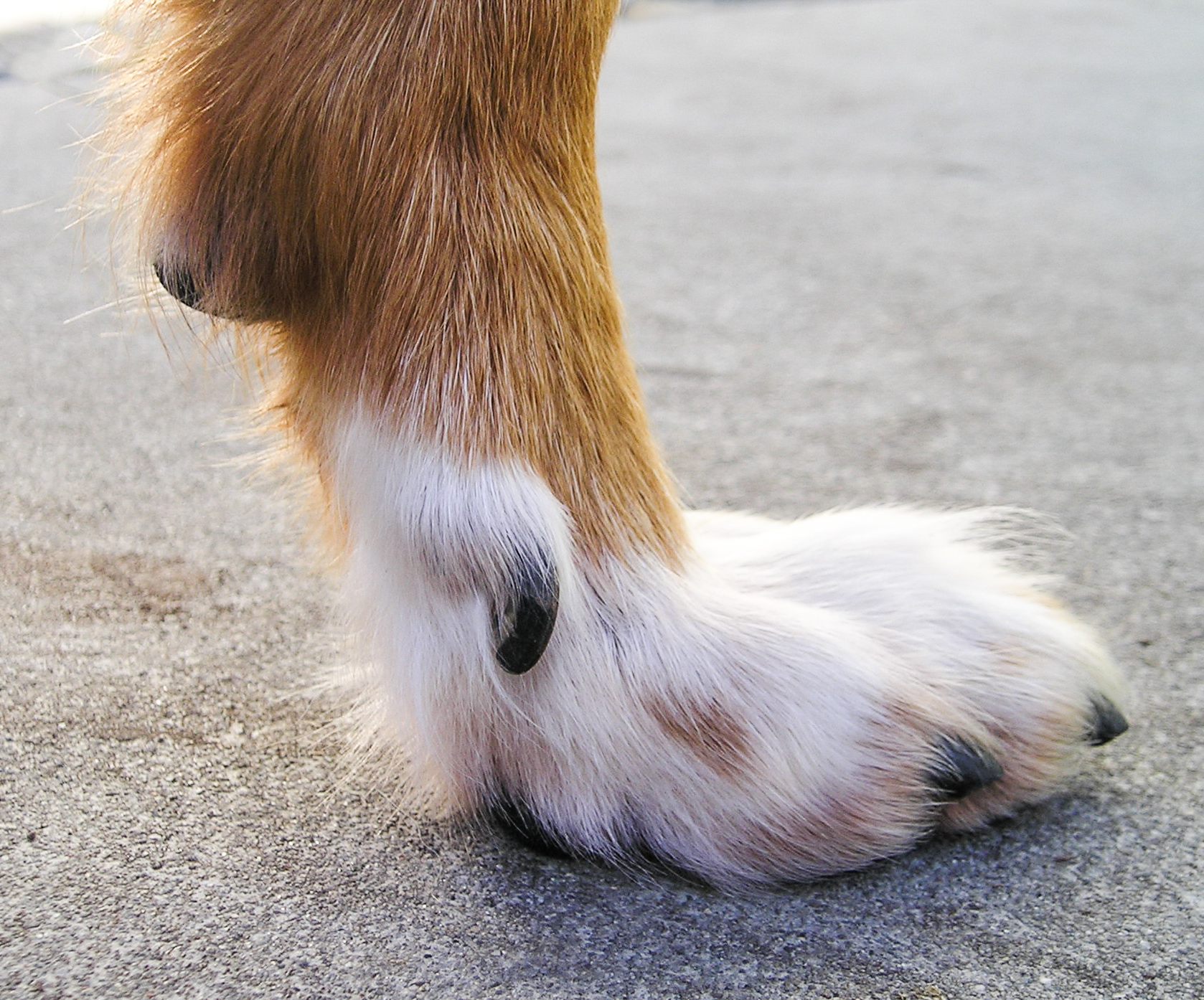
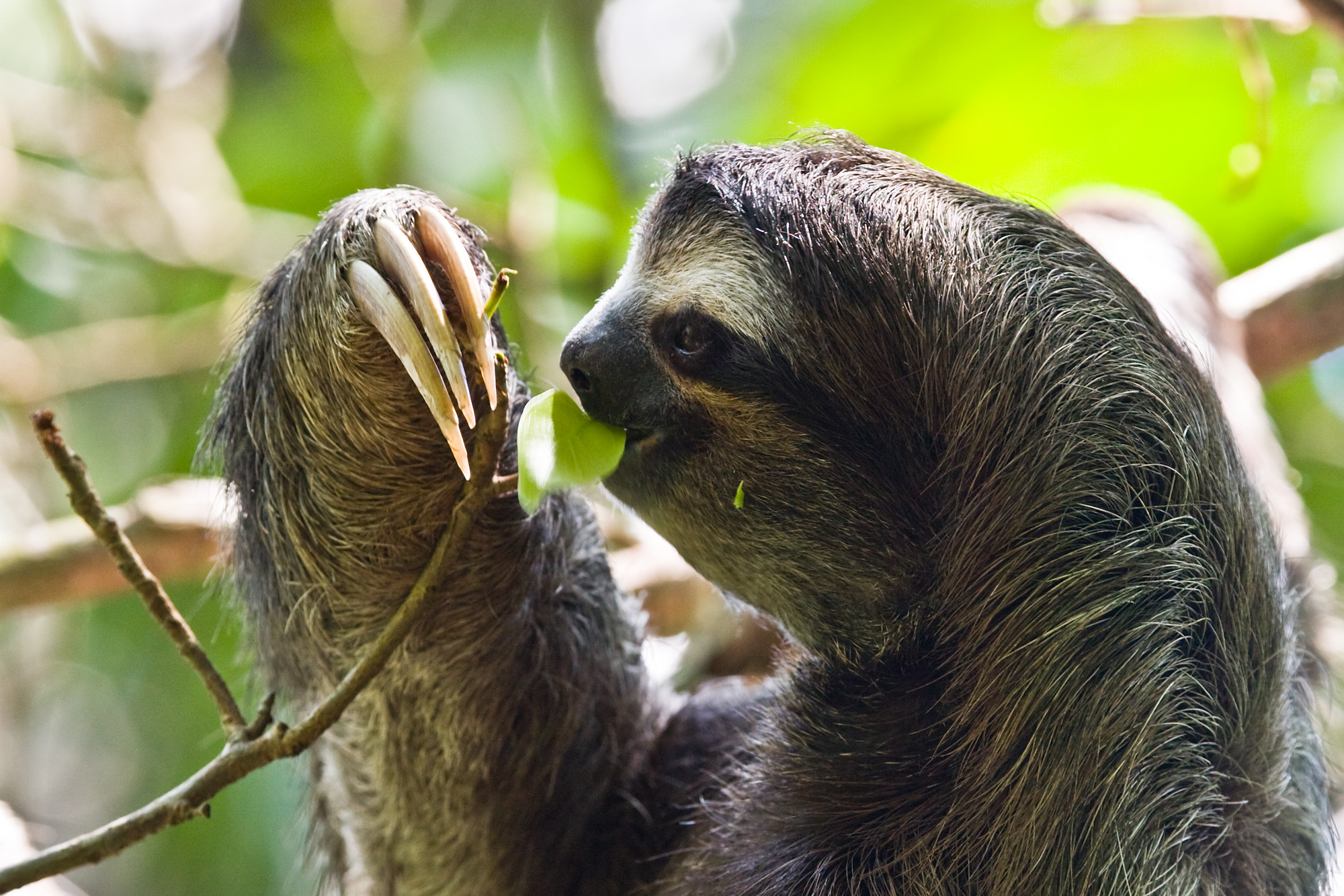
a.     The two different species that I further researched were the sloth and a dog, they share the homologous trait of both having claws.
b.     The sloth has a much longer and sharper claw.  Its claws are used a s a defensive mechanism against predators. Usually a sloth with swing with its claws to scare off other animals. Sloths claws also allow for them to grab on to trees and just hang on them.  Dogs on the other hand have much smaller claws than that of a sloth. Dogs have small claws located on their four feet. Dogs typically use there claws to grip on to items. Also a dogs claws helps with the dogs speed and its direction.
c.      According to the article by Scientific American, the common ancestor called Maelestes gobiensis lived more than 70 million years ago in the desert area of Gobi. It common ancestor was very small and shrew like according to its fossils that were found in 1997.


http://www.scientificamerican.com/podcast/episode/4b1665ec-e7f2-99df-332752a3d3e23b03/
http://www.worldanimalfoundation.net/f/Sloth.pdf

Analogous

a.     Two different species that posses the analogous trait is the kangaroo a mammals and a crocodile a reptile.  I wanted to research this because I noticed that both species have a long and what appears to be strong tail.
b.     Both species have longer tails than other animals and seem to be very large compared to their size.  Both species have their tails located behind them and use them to their advantage. A kangaroo often uses its tail as third leg, for balance, and for assistance in leaping.  A crocodile will use its tail as a weapon to defend itself from predators.  Just like the kangaroo a crocodile will use its tail for assistance in moving. A crocodiles tail allows the reptile to propel through water.  I also found it interesting that crocodiles use its tail to store fat that can be used for nourishment during the winter season.
c.      I could not find a common ancestor to see if they posses this analogous trait, but I did find a few animals that share traits from both a kangaroo and crocodile. 

http://www.enchantedlearning.com/subjects/Alligator.shtml
http://www.pbs.org/wnet/nature/episodes/kangaroo-mob/marsupials-the-evolution-backstory/7464/


Tuesday, January 14, 2014

Wednesday, January 8, 2014

Historical Influences on Darwin


After doing a bit of research on each of the individuals, I believe that Thomas Malthus has the most influence over Charles Darwin’s development of his theory of Natural Selection. In my brief research I found that Charles Darwin read Thomas Malthus essay on the “Principle of Population” which contributed to Darwin formulating his theory on natural selection. Along with Alfred Russel Wallace, Darwin researched the logic even further to support their theory. I believe Thomas Malthus was a positive influence on Darwin and his work and studies helped Darwin establish his own theories and ideas. Thomas Malthus concluded in his essay on the Principle of Population that famine and poverty were both natural outcomes of population grown and food supply. Malthus also stated in his well known essay that in nature both plants an animals overproduce to the point where they can not survive and if humans do not regulate population, them to can overpopulate.
            A key point of Malthus is that all organisms have the potential or reproducing exponentially, even humans if not regulated. Malthus came to a conclusion that if the human population does not get regulated, man could potentially suffer from epidemic famine. Darwin was able to expand this further and build his theory on it as well. Charles Darwin came to a conclusion that overpopulation will prove a competitive environment among its species. Another fact that Darwin came to a conclusion is that resources are limited; therefore only species that evolve to have an advantage will survive. Malthus had a positive influence on Darwin, especially from his work of the essay Principle of Population. Charles Darwin was able to study this further and build his theory from that essay. I believe that Charles Darwin could have developed his theory of natural selection without the influence and ideas of Malthus but not fully. Darwin had already been forming his own theory of natural selection and worked with other individuals that furthered his theories. I believe that with out the influence of Malthus, Darwin would have taken much longer to build his theory and would have different ideas and views. Darwin already believed in survival of the fittest and Malthus work I believed helped him support his ideas. The attitude of the church affected Darwin’s work and eventually the publication of his book because he was more private and hesitant about revealing is work. With the negative pressure of the church in believing something different, Darwin had a hard time-sharing his ideas and theories to others. The attitude of the church not being very accepting of contradicting ideas made Darwin very private about his work. Darwin wanted to make sure that all his facts and theories were fully supported before sharing it with the public. I believe that if the attitude of the church had been more encouraging and accepting to new beliefs and ideas, Darwin would have been much more successful in his work. Darwin was intimidated by the church and was hesitant to share his work with others, fearing that clergyman would criticize him on his ideas.